Showing posts with label agriculture and food chemistry. Show all posts

Saturday, May 30, 2015

Neonicotinoids pesticides


Recently, the word "neonicotinoids" as a group of insecticides appear frequently in various news reports because the concerns of their association with the increasing mortality rate of honeybees. Because of the potential impact on the pollinators including honeybees, neonicotinoids are at a stage of "near ban". High priority for conducting further risk assessment on neonicotinoids is given by chemical regulations agencies.

Let's have a closer look at neonicotinoids

As indicated by the name, neonicotinoids are related to nicotine.
nicotine


Neonicotinoids is a group of pesticides most widely used in the world. The group includes

acetamiprid

clothianidin
imidacloprid

nitenpyram
nithiazine

thiacloprid 

thiamethoxam. 


Neonicotinoids act on the central nervous system of insects. Neonicotinoids can bind to some receptors in the nervous system and prevent impulses transmitting between nerves. This biochemical action mechanism would make insecticides exposed to neonicotinoids unable to move and eventually die.

Neonicotinoids have high water solubility and break down slowly in soil. They are often applied to soil and be taken up by plants and provide protection from insects as the plant grows.

When developed, neonicotinoids were claimed to have low-toxicity to many beneficial insects, including bees. However,  toxic effects to bees and other beneficial insects have been realized recently. Bees and other pollinators expose to neonicotinoids through nectar and pollen where neonicotinoids are used in agriculture for pest control. Although the exposed levels are sub-lethal , they may impact some bees’ ability to navigate to flowers and nectar.

Despite some controlled studies, more information is still needed to link neonicotinoids to the bee colony collapse disorder and increased mortality rate of honeybees. However, to keep potential risk to bees and other beneficials low, Corn farmers in Ontario and Quebec are requested to use dust deflectors on their seed planters, and that the seed companies use a seed lubricant to minimize the dust that is emitted during planting.

References and more information:

http://www.theglobeandmail.com/report-on-business/new-usda-survey-reveals-alarming-increase-in-honeybee-mortality-rate/article24420306/
http://www.wsj.com/articles/over-40-of-honeybee-colonies-died-in-year-usda-says-1431531544
http://www.huffingtonpost.com/jon-entine/neonics-not-key-driver-of_b_6928578.html
http://www.bulletinofinsectology.org/pdfarticles/vol67-2014-125-130lu.pdf


Sunday, March 29, 2015

Modern analyses of ancient beer

A recent issue of the Journal of Agriculture and Food Chemistry published an interesting article on chemicals in beers from an 1840s’ shipwreck. 
(photo source: http://www.sci-news.com/, Image credit: John Londesborough et al.) 

In 2010, underwater archaeologists discovered an old schooner south of the Åland Islands at a depth of 50 m in the Baltic Sea. Archeological evidence suggests the shipwreck occurred during the 1840s, but the schooner’s name, its destination and its last port-of-call were not identified. Archeologist brought the cargo consisting of luxury items, including more than 150 bottles of champagne and five bottles that look like typical early 19th century beer bottles to the surface. One of these cracked in the divers’ boat. The liquid that foamed from the cracked bottle looked and, according to the divers, tasted like beer.

Researchers from Finland analyzed two bottles of the beer from the shipwreck  and six bottles of modern  beers (Leffe Brune, Koff Porter, Weihenstephan Hefe Weissbier, Paulaner Hefe Weissbier, Aldaris Porteris Alus, and Olvi Sandels) as reference. The founding provides clues for beer makers to resurrect the flavors of ages past.

The beer samples were degassed by ultrasonification and filtered (0.45 μm). An aliquot (5 μL) was loaded to an HPLC-MS/MS system (high performance liquid chromatography coupled with tandem mass spectrometry) and analyzed for hops related compounds (native or degradation products).

========================================================================
Sidenote (from Wikipedia): Hops are the female flowers of the hop plant, Humulus lupulus.


Hops are used primarily as a flavoring and stability agent in beer. Hops impart a bitter, tangy flavor to beer. Hops have antibacterial effect that favors the activity of brewer's yeast over less desirable microorganisms and for many purported benefits such as balancing the sweetness of the malt with bitterness and contributing a variety of desirable flavors
========================================================================


Above: Chemical structures of bitter chemicals identified in hops and freshly brewed beer; Below: Chemical structures of bitter chemicals identified in aged beer (Source: J. Agric. Food Chem. 2010, 58, 7930–7939)
Based on the chemical fingerprint in the beer, the two bottles of ancient beer were identified as two different kind of beer.  One was more strongly hopped than the other. 


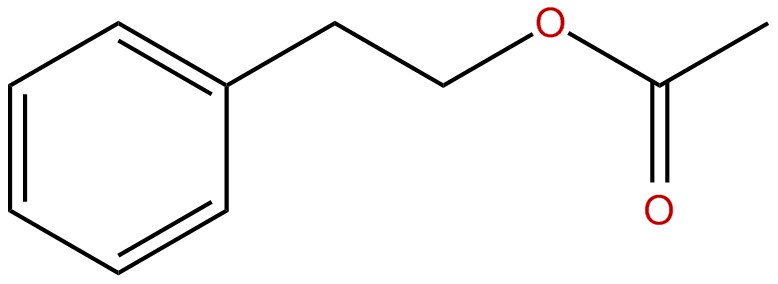
High levels of organic acids, carbonyl compounds, and glucose indicated extensive bacterial and enzyme activity during aging. However, concentrations of yeast-derived flavor compounds were similar to those of modern beers, except that 3-methylbutyl acetate
was unusually low in both beers and 2-phenylethanol
and possibly 2-phenylethyl acetate
were unusually high in one beer. Concentrations of phenolic compounds were similar to those in modern lagers and ales


Besides hops related chemicals, the researchers also analyzed other chemical components in the ancient beer. Compared to typical modern lagers and ales, ethanol contents of the shipwreck beers were low (2.8-3.2%). Glycerol and ethanol had a ratio of 4.5% for both shipwreck beers, which is typical for a yeast fermentation product. Both beers were acidic, but their pH were ~1 below modern values. The color strengths were in the range of modern ales and lagers, and much lower than porters or stouts. Possibly been oxidized after over the 170 years, sulfur dioxide was not detected in shipwreck beers. Protein levels were very low in both beers.
References: 

  • John Londesborough, Michael Dresel, Brian Gibson, Riikka Juvonen, Ulla Holopainen, Atte Mikkelson, Tuulikki Seppänen-Laakso, Kaarina Viljanen, Hannele Virtanen, Arvi Wilpola, Thomas Hofmann, and Annika Wilhelmson J. Agric. Food Chem. 2015, 63, 2525−2536 DOI: 10.1021/jf5052943 Analysis of Beers from an 1840s’ Shipwreck 2015, 63 (9), pp 2525–2536
  • Gesa Haseleu, Annika Lagemann, Andreas Stephan, Daniel Intelmann, Andreas Dunkel and Thomas Hofmann. Quantitative Sensomics Profiling of Hop-Derived Bitter Compounds Throughout a Full-Scale Beer Manufacturing Process. J. Agric. Food Chem., 2010, 58 (13), pp 7930–7939 DOI: 10.1021/jf101326v
  • http://www.sci-news.com/othersciences/chemistry/science-beer-1840s-shipwreck-finland-02567.html