Showing posts with label chemical management. Show all posts

Wednesday, July 8, 2015

100 million unique chemical substances registered in CAS database


This year marks the 50th anniversary of CAS Registry and also the 100 Millionth CAS Registry Number. CAS Registry is world’s largest database of unique chemical substances. It identifies each chemical substances with a specific CAS registry number, index name, and graphic representation of its chemical structure. Information in CAS Registry about the many different types of substances includes: synonyms, molecular formulas, ring analysis data, structure diagrams, experimental and predicted property data, and literature references.

Substances included in CAS Registry are from journal articles, patents, chemical catalogs, and reputable web sources from the early 1800s to present. Organic chemicals with MW<1000 are dominant in CAS Registry. In addition to organic chemicals, CAS Registry also include alloys, coordination compounds, minerals, mixtures, polymers, salts, sequences, organometallics, proteins, and inorganic substances.

As chemical innovation continues at the current pace, it is expected chemical substances in CAS REGISTRY in 50 years would be more than 650 million. and the number would be significant higher with the past growth trajectory.

Such large number and fast increasing of chemical substances require high-throughput approaches be applied for hazard and risk assessment and chemical management.


References
CAS Content at a Glance (http://www.cas.org/content/at-a-glance)

Saturday, June 6, 2015

Plastic microbeads in personal care products

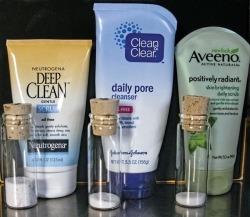
Plastic (mainly polyethylene) microbeads are used in thousands of cosmetics and toothpaste around the world. Plastic microbeads used in personal care products are generally in particle sizes from 10 µm to 100 µm. Such particles serve the function of washing or rubbing a part of the body to remove dead cells from the surface of the skin
photo credit: http://marine-conservation.tumblr.com/post/86646501131/california-bill-would-ban-microplastics-in

Plastic microbeads are used in large quantities and are washed down the drain after use. However, they cannot be efficiently filtered or removed during sewage treatment. As a result, a large amount of plastic particles enter the environment, cause water pollution. Plastic beads eventually end up in the oceans, which are described as "plastic soup" due to a large amount there .   The microbeads are not ready to degrade and can pass through the marine food webs. High concentrations of micro plastic have been found in inland water such as the Great Lakes and in the oceans and also in the body of various marine creatures. 

It is estimated that over 90% of micro plastic in the environment are from the plastic microbeads used in personal care products (Eriksen, Marcus et al. (2013) Microplastic pollution in the surface waters of the Laurentian Great Lakes". Marine Pollution Bulletin 77: 177–182. doi:10.1016/j.marpolbul.2013.10.007). 

Due to the potential environmental problems such plastic microbeads are being removed from personal care products and replaced by naturally biodegradable alternatives by some manufactures.  However, there are still a far cry to say that all personal care products contain plastic microbeads. I recommend we check whether the personal care product we are using still contain environmental unfriendly plastic microbeads from this websites: 

http://beatthemicrobead.org/en/product-lists