Showing posts with label pollution. Show all posts

Saturday, March 14, 2015

Purifying urban air with pavement containing titanium dioxide

A recent study published in the journal of Atmospheric Environment by Folli et al. demonstrated the effectiveness of cleaning NOx in urban air via photocatalytic oxidation using titanium dioxide as semiconductor photocatalyst added to pavement.

(source of image: www.mapfre.com)


The advantage of such technology is that photocatalystic oxidation only requires sunlight, existing oxygen and water in air. Therefore, remediation is continuous in day light.

In this study, researchers conducted a year-long field test in the city of Copenhagen. They employed two continuous air monitoring stations, one in the area with photocatalytic concrete pavers and the second one in the area without photocatalytic concrete and assessed the effectiveness of TiO2 containing pavement in removing NOx in the air.

The study indicates that a monthly abatement of NO was around 22% in the summer months;
NO noon abatement was >45% at the summer solstice, which corresponded to NOx noon abatement > 30%.


Personally, I think such technology is very promising although more research work needs to be done. Research questions worth to be addressed include but not limited to

  • Does the technology also has the benefit of degrade other toxic chemicals in urban air such as polycyclic aromatic compounds?
  • What's the over all benefit of such technology if widely used in urban pavement and building walls and how does the benefit of removal toxic chemicals compared to the cost. 
  • What degradation products can be generated and how do they affect urban air and environmental quality? 


 In addition to the article by Folli et al. mentioned above http://dx.doi.org/10.1016/j.atmosenv.2015.02.025, the following articles on the removal of pollutants by adding TiO2 in cement are also informative on this topic.


  • Folli, J.Z. Bloh, M. Strøm, T. Pilegaard Madsen, T. Henriksen, D.E. Macphee Efficiency of solar-light-driven TiO2 photocatalysis at different latitudes and seasons. Where and when does TiO2 really work? J. Phys. Chem. Lett., 5 (5) (2014), pp. 830–832 http://dx.doi.org/10.1021/jz402704n
  • J. Ângelo, L. Andrade, L.M. Madeira, A. Mendes An overview of photocatalysis phenomena applied to NOx abatement J. Environ. Manag., 129 (2013), pp. 522–539 http://dx.doi.org/10.1016/j.jenvman.2013.08.006
  • M.M. Ballari, H.J.H. Brouwers Full scale demonstration of air-purifying pavement J. Hazard. Mater., 254–255 (2) (2013), pp. 406–414 URL http://dx.doi.org/10.1016/j.jhazmat.2013.02.012



Friday, January 23, 2015

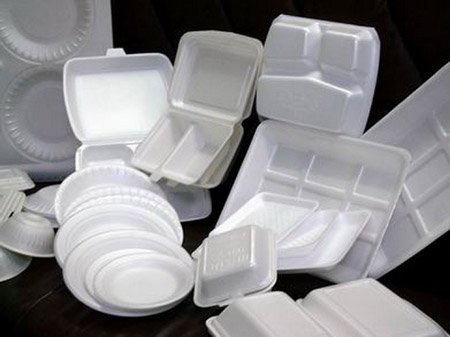
polystyrene containers


New York City bans polystyrene food containers


As estimated by the city’s Department of Sanitation, 28,500 tons of expanded polystyrene was discarded in 2014 and  approximately 90% of this amount consisted of single-use cups, trays, and containers.

The difficulty  to recycle economically due to heavy wax or plastic coatings, polystyrene food and beverage containers triggered their recent banning in New York City. A number of other cities, including Seattle, Portland, and San Francisco, as well as Washington, D.C. have already banned polystyrene food containers before.  Food establishments, stores, and manufacturers in New York City may not possess, sell, or offer to customers plastic foam containers and thus will be seeking alternative materials. In addition, the city will also prohibit the sale of loose-fill polystyrene—commonly called packing peanuts.

Polystyrene, is manufactured using benzene, from coal; styrene, from petroleum; and ethylene, a "blowing agent" used in the process since the crackdown on CFCs. Extracting these raw materials generates air and water pollution, and the process of whipping them together can lead to lung cancer and neurological problems in factory workers. Polystyrene is non-biodegradable and after entering the environment, it will around even after a century.
Human population using polystyrene food containers can ingest a bit of styrene with the drink and food. Researches have demonstrated that styrene has been present in our fatty tissue and breast milk for the past 30 years. 
After the banning, alternative containers will replace the foam containers.   For example, those made of recycled papers. Such alternatives may get degraded more easily than the polystyrene, however, they still cause environmental footprint. For example, from chemicals used during the manufacture stage. 
More information: 
http://www.earthresource.org/campaigns/capp/capp-styrofoam.html
http://cen.acs.org/articles/93/i3/Big-Apple-Bans-Foam-Containers.html
http://isites.harvard.edu/fs/docs/icb.topic967858.files/PolystyreneFactSheets.pdf


Tuesday, January 20, 2015

Indoor PCBs can be problematic!

This paper (Inhalation and Dietary Exposure to PCBs in Urban and Rural Cohorts via Congener-Specific Measurements) published by Ampleman et al. in the latest issue of Environmental Science & Technology did a very comprehensive study on indoor PCB levels and once again highlighted the important contribution of polychlorinated biphenyls (PCBs) from indoor sources to human exposure.


PCBs are persistent organic chemicals that were used in construction materials and electrical products produced before 1979. PCBs have been demonstrated to cause cancer, as well as a variety of other adverse health effects on the immune system, reproductive system, nervous system, and endocrine system. See the USEPA website for more information.

With regulations, PCB levels in the general environment have decreased substantially. However, in buildings built between 1950 and 1979, indoor concentrations of PCBs may still be  at high levels. Based on my previous studies, PCB concentrations measured in the air of contaminated buildings in Toronto Canada can be over 100 ng/m3 (http://pubs.acs.org/doi/abs/10.1021/es102767g, http://pubs.acs.org/doi/abs/10.1021/es2032373)   Human with an inhalation rate of 18m3/d would inhale ~1600 ng/d assuming 90% of time spent in the indoor environment. For people with body weight of 70 kg, body weight normalized exposure just from inhalation would be over 20 ng/kg bw /d

The U.S. EPA has calculated prudent public health levels that maintain PCB exposures below the "reference dose" - the amount of PCB exposure that EPA does not believe will cause harm. EPA's reference dose (RfD) is 20 ng PCB/kg body weight per day.

Based on the information provided by the USEPA, "the largest source of PCB exposure for most individuals in uncontaminated buildings is diet, which contributes roughly 50-60% to total PCB exposure.Typical indoor and outdoor air contains a small amount of PCBs, and inhalation exposure accounts for another 25 to 35% of total exposure. Together, these non-school sources of PCBs generally result in exposures that are significantly below the reference dose. "

However, for PCB contaminated indoor environment, indoor exposure pathway could be even higher than dietary exposure and pose health risk to inhabitants. While environmental regulations require PCB contaminated soil and sediment to be remediated, how about PCB contaminated indoor environment then?