Electronic cigarette is also referred as e-cig or e-cigarette, which is a battery-powered vaporizer which has a similar feel to tobacco smoking.
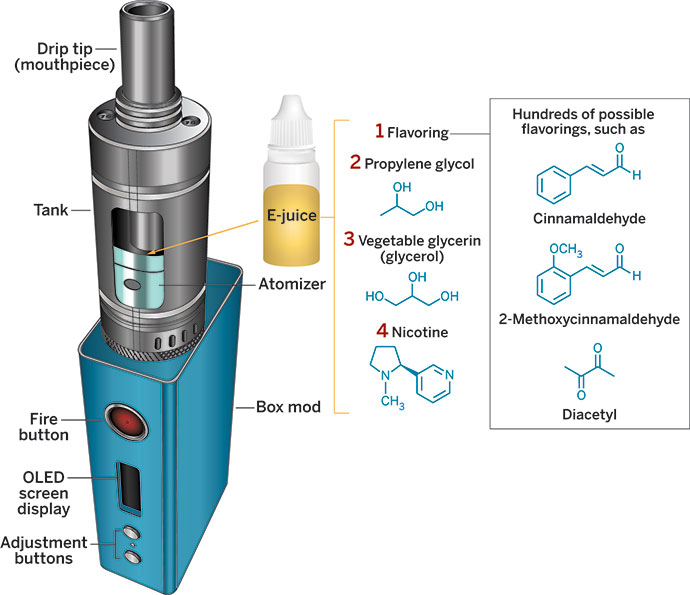
Third generation of e-cigarette that have organic light-emitting diode displays and buttons to adjust wattage or voltage.
Credit: Shutterstock/C&EN
Electronic cigarettes do not contain tobacco, although they do use nicotine from tobacco plants. They do not produce cigarette smoke but rather an aerosol. In general, they have a heating element that atomizes a liquid solution known as e-liquid. E-liquid, also referred as e-juice or simply "juice", is a liquid solution that when heated by an atomizer produces vapor. The main ingredients of e-liquids are usually a mix of
propylene glycol (PG),

glycerin (G)

and/or polyethylene glycol 400 (PEG400),

sometimes with differing levels of alcohol mixed with concentrated or extracted flavourings;

E-cigarette fluid or “e-juice” comes in thousands of flavors, including pineapple custard and Scooby snack.
Credit: Associated Press
and optionally, a variable concentration of tobacco-derived nicotine.ingredients but without nicotine.
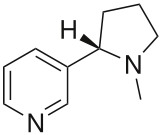
The solution is often sold in bottles or pre-filled disposable cartridges, or as a kit for consumers to make their own eJuices. Components are also available to modify or boost their flavour, nicotine strength, or concentration of e-liquid. Pre-made e-liquids are manufactured with various tobacco, fruit, and other flavors, as well as variable nicotine concentrations (including nicotine-free versions). Surveys suggested that the most liked e-liquids had a nicotine content of 18 mg/ml, and largely the favorite flavors were tobacco, mint and fruit. The flavorings may be natural or artificial.
Flavoring substances not identified in a natural product intended for human consumption, whether or not the product is processed. These are typically produced by fractional distillation and additional chemical manipulation of naturally sourced chemicals, crude oil or coal tar.
Most artificial flavors are specific and often complex mixtures of singular naturally occurring flavor compounds combined together to either imitate or enhance a natural flavor. These mixtures are formulated by flavorists to give a food product a unique flavor and to maintain flavor consistency between different product batches or after recipe changes. The list of known flavoring agents includes thousands of molecular compounds, and the flavor chemist (flavorist) can often mix these together to produce many of the common flavors.
| Chemical | Odor |
|---|---|
| Diacetyl | Buttery |
| Isoamyl acetate | Banana |
| Benzaldehyde | Bitter almond |
| Cinnamaldehyde | Cinnamon |
| Ethyl propionate | Fruity |
| Methyl anthranilate | Grape |
Limonene | Orange |
| Ethyl decadienoate | Pear |
Allyl hexanoate | Pineapple |
| Ethyl maltol | Sugar, Cotton candy |
Ethylvanillin | Vanilla |
Methyl salicylate | Wintergreen |





References and more to read:
http://cen.acs.org/articles/93/i7/Boom-E-Cigarettes-Sparks-Calls.html
http://en.wikipedia.org/wiki/Electronic_cigarette#Atomizer
http://health.howstuffworks.com/wellness/smoking-cessation/10-facts-about-e-cigarettes.htm
http://en.wikipedia.org/wiki/Flavor