Showing posts with label persistent organic pollutant. Show all posts

Tuesday, February 10, 2015

Chemicals used for vector control


DDT has been used in malaria vector control because of its long residual efficacy when sprayed on walls and ceilings (6–12 months depending on dosage and nature of substrate).

Vector control is a method to limit or eradicate the mammals, birds, insects or other arthropods which transmit disease pathogens. The most frequent type of vector control is mosquito control using a variety of strategies.

DDT has been listed in the Stockholm Convention for persistent organic pollutants for international control. Recognizing that total elimination in many malaria-prone countries is currently unfeasible because there are few affordable or effective alternatives, the convention exempts public health use within World Health Organization (WHO) guidelines from the ban.

Today, about 3,000 to 4,000 tonnes of DDT are produced each year for vector control. DDT is applied to the inside walls of homes to kill or repel mosquitoes. This intervention, called indoor residual spraying (IRS), greatly reduces environmental damage. It also reduces the incidence of DDT resistance.
DDT (dichlorodiphenyltrichloroethane)

Reference
http://www.chem.unep.ch/DDT/documents/WHO_FAQonDDT.pdf
http://whqlibdoc.who.int/hq/2011/WHO_HTM_GMP_2011_eng.pdf
http://en.wikipedia.org/wiki/DDT
http://www.epa.gov/airquality/community/details/i-pesticides.html


Wednesday, February 4, 2015

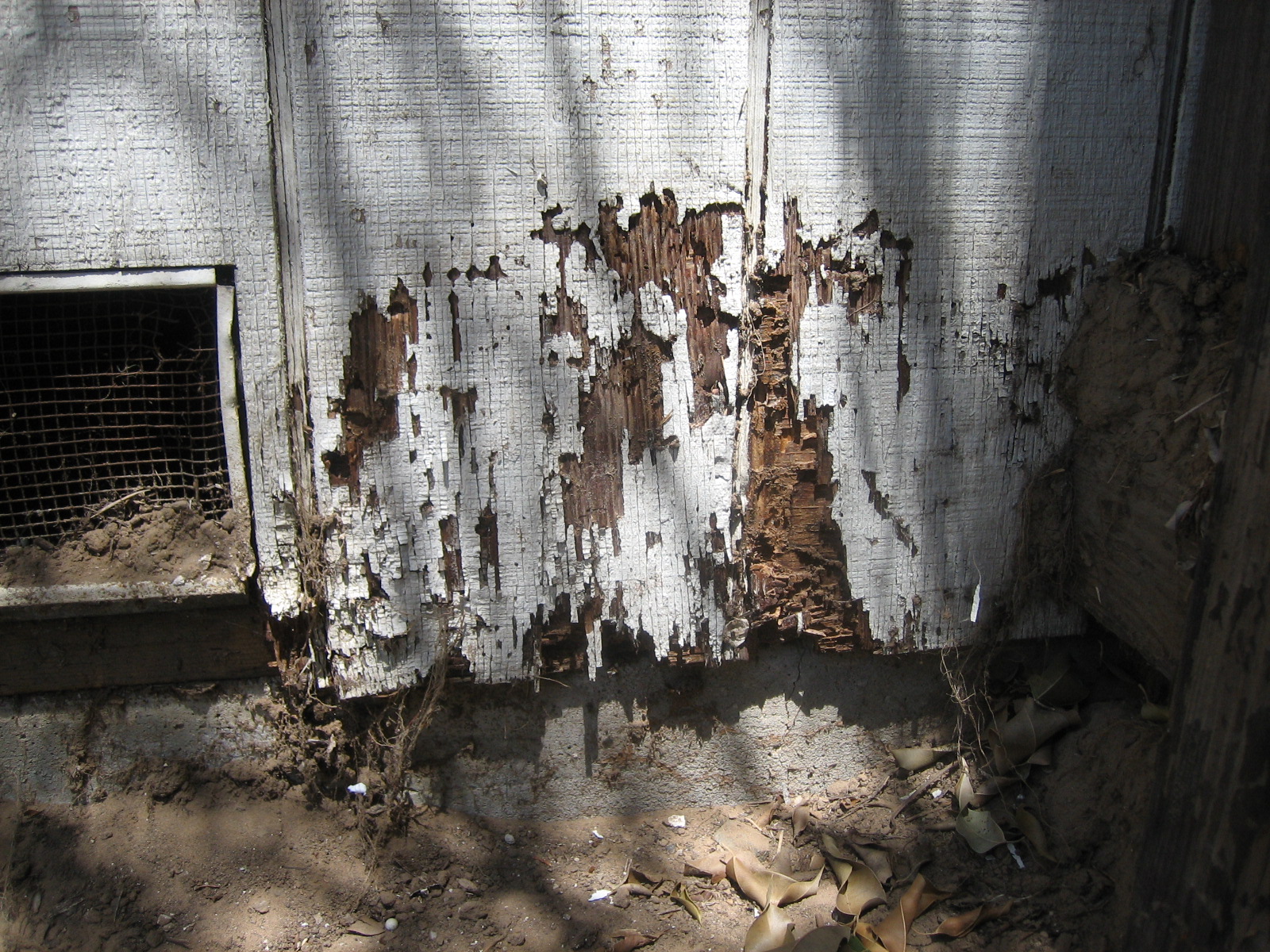
Historical used organochlorine termiticides

Organochlorine termiticides are a group of pesticides that were used for termite control in and around wooden buildings and homes from the mid-1940s to the late 1980s. These organochlorine pesticides included chlordane, aldrin, dieldrin, heptachlor, and dichlorodiphenyltrichloroethane (DDT). They
were used primarily by pest control operators in tropical urban areas, but also by homeowners, the military, the state, and counties to protect buildings against termite damage.


Chlordane as one of the most widely used termiticide before 1980s


In the 1970s and 1980s, the U.S. Environmental Protection Agency (EPA) banned all uses of these organochlorine pesticides except for heptachlor, which can be used today only for control of fire ants in underground power transformers.

Termiticides were commonly applied directly to soil beneath buildings or beneath slab foundations and around the foundation perimeter for new construction. They may also have been periodically applied underneath the building (if accessible) at occupied structures, around the perimeter of the foundation, or in trenches excavated around the foundation, or by injection through holes drilled next to the foundation or in the flooring at the periphery of walls.

These pesticides break down slowly in the environment, application rates were relatively high, and applications may have been repeated over time. As a result, these organochlorine termiticides may sometimes still be found in treated soils. The organochlorine termiticides contaminated soil becomes secondary source of the chemicals in he air.


Recommended  actions to limit or avoid exposure include:
 Plant grass or other non-edible vegetation
 Cover contaminated soil with some kind of surface material such as gravel (within several feet of the foundation) to act as a barrier to prevent soil exposure.
 Keep children from playing in dirt near the foundation and keep toys, pacifiers, and other items that go into children’s mouths clean.
 Locate pet enclosures away from the perimeter of the building foundation.
 Do not grow edible produce such as fruits and vegetables in potentially contaminated soils next to the building foundation. Cover the soil next to the foundation, or add clean soil and landscape with non-edible plants.
 Do not relocate soils from underneath the building or from the foundation perimeter to other areas of the property.
 To reduce exposure to soil, cover bare soil underneath the house with a barrier material such as gravel or plastic before you work or store materials underneath the house.

 Wash hands and face thoroughly after you work or play in soil near the building foundation, especially before meals and snacks.
 Avoid tracking soil from near the foundation perimeter into the home and clean it up right away if soil is tracked in. Remove work and play shoes before you enter the house. Keep pets from tracking
contaminated soil into your home.
 If you work with contaminated soil or soil that may be contaminated, you should wear gloves and
protective clothing (long-sleeve shirt and pants) to reduce exposure. A protective paper mask (N-95 type with two elastic straps) should be worn if airborne dust is present (such as when you are operating a weed-eater in contaminated or potentially contaminated areas). Working with contaminated soil may leave residues on your clothing, so change clothes and shower after you work with the soil and avoid spreading dirt from clothes or shoes into your vehicle or house.

Information retrieved from
http://eha-web.doh.hawaii.gov/eha-cma/Downloads/HEER/termiticidefactsheetfinalsept2011.pdf


Saturday, January 31, 2015

Microplastics and the environment


We use a lot of plastic material  in our everyday life.  Once get into the environment, large pieces will turn to small plastic particles or microplastics.   Microplastics in the environment has become an important issue in aquatic environment.

What is microplastics? Microplastics is operational defined according to the size. Generally, plastic particles smaller than 5 mm are defined as microplastics.


Photo credit: http://5gyres.org/

What types of microplastics are there?
(1) primary microplastics -- the plastics that are manufactured to be of a microscopic size. They are usually used in facial cleansers and cosmetics, or in the air blasting technology. In some cases, their use in medicine as vectors for drugs was reported. Microplastics ‘‘scrubbers’’, used in exfoliating hand cleansers and facial scrubs, have replaced traditionally used natural ingredients, including ground almonds, oatmeal and pumice.
(2) secondary microplastics --  from the breakdown of larger plastic debris, both at sea and on land due to physical, biological and chemical processes that reduce the structural integrity of plastic debris

What environmental problems microplastics cause?
Microplastics may pose problems in the marine environment because of the persistence of microplastics (their likely buildup in the future), and the ingestion by marine organisms. Ingestion of microplastics by species at the base of the food web causes concern as little is known about its effects. Potential effects of microplastics on marine organisms after ingestion include:

  • physical blockage or damage of digestive tract
  • leaching of plastic component chemicals into organisms
  • ingestion and accumulation of sorbed chemicals by the organism

Microplastics and POPs
persistent organic pollutants (POPs)can accumulate on microplastics, which may influence the global transport of POPs. The role of microplastics in the transfer of POPs from the environment to organisms is unknown. Because microplastics can possibly act as a carrier for POPs to enter food webs meanwhile it may lower the bioavailability of POPs to organisms in the food web.

Another concerns of microplastics and toxic chemicals is from additives such as plasticizer added to plastics during manufacture. The plasticizers, some of which have endocrine disruptive effect,  may leach out upon ingestion.

Currently, there is no study that test if microplastics can be transferred across trophic levels.

References and read more:
http://5gyres.org/
http://voices.nationalgeographic.com/2013/04/12/new-concerns-about-plastic-pollution-in-great-lakes-garbage-patch/
http://en.wikipedia.org/wiki/Microplastics

Thursday, January 22, 2015

Flame retardant-polybrominated diphenyl ethers

Polybrominated diphenyl ethers or PBDEs, are used as flame retardant in a wide array of products, including building materials, electronics, furnishings, motor vehicles, airplanes, plastics, polyurethane foams, and textiles. They are structurally akin to the PCBs and other polyhalogenated compounds, consisting of two halogenated aromatic rings.


PBDEs bioaccumulate in blood, breast milk, and fat tissues. Bioaccumulation is of particular concern in such instances, especially for personnel in recycling and repair plants of PBDE-containing products.
photo source: http://www.greenpeace.org/international/en/campaigns/detox/electronics/


People are also exposed to these chemicals in their domestic environment because of their prevalence in common household items.  PBDEs have been found in common foods such as salmon, ground beef, butter, and cheese and also in indoor dust, sewage sludge, and effluents from wastewater treatment plants.

There is also growing concern that PBDEs share the environmental long life and bioaccumulation properties of polychlorinated dibenzodioxins. With levels found in households, PBDEs could reduce fertility in humans. Because of their toxicity and persistence, the industrial production of some PBDEs is restricted under the Stockholm Convention, a treaty to control and phase out major persistent organic pollutants (POPs).

Despite of the regulations,  there is still huge amount of PBDEs in products in use.
A recent study has estimated 60% of the stock of PBDEs (most Deca-Mixture) in 2014 will remain in the use phase in 2020. Such estimation considers only the first use (no reuse and/or storage) of PBDE-containing products. Additional PBDEs will be in the use phase in the future via reuse of PBDE containing material.

For more information in PBDE stock and emissions, read this article recently published in Environmental Science & Technology