Showing posts with label waste management. Show all posts

Tuesday, February 3, 2015

UN Calls for Wastewater Focus

In my research, I focus on toxic chemicals that cannot be removed from wastewater treatment. And a lot of studies aim to develop advanced wastewater treatment technologies to remove more toxic chemicals in order to reduce loadings of toxic chemicals to the environment, which would affect ecosystems and in turn human health.

IMG_4994

While developed countries such as Canada and the USA have over 90% of wastewater treated, sanitation of wastewater is still a big challenge faced by many low-income countries.  The global data indicate that only 20% of global wastewater is currently being treated. Wastewater in some developing countries is barely treated before released to the environment. Low-income countries possessing only 8 per cent of the required capacity to treat wastewater effectively. Such untreated wastewater is likely to contaminate water supplies and cause diseases. A UN-Water Analytical Brief, produced by the World Health Organization (WHO), the United Nations Environment Programme (UNEP) and UN-Habitat, on behalf of UN-Water, describes the damage being done to ecosystems and biodiversity as 'dire' and warns of the threat wastewater will increasingly pose to human health, economic activity, and water security if left unaddressed.

It is obvious that sustainable wastewater management will become a key task for the world to apply in the coming years.

UN and WHO officials pointed out  "Wastewater management has been neglected in the rush to commercialize drinking water production, a situation exacerbated by a fragmented water management system in many countries, and the use of different technologies that are often designed separately and retrofitted to existing systems."

"Around 70 per cent of industrial discharge in developing countries goes untreated. And eutrophication - from wastewater and agricultural run-off - has, according to recent estimates, reduced biodiversity in rivers, lakes and wetlands by about one-third globally."

"It is time to turn this environmental and human health challenge into an opportunity. Agriculture consumes 70 per cent of global water withdrawal, but agricultural irrigation from reclaimed wastewater is on the rise, and is being used to irrigate 20 to 45 million hectares worldwide. This is just a fraction of what is possible if policy and available technologies converge to ensure that wastewater and water quality are fully integrated into a more holistic water agenda as part of the post-2015 process,"

"To be successful and sustainable, wastewater management must be an integral part of the critical levers of urban planning and legislation resulting in productive, healthy and livable cities. The upcoming UN Conference on Housing and Sustainable Urban Development, Habitat III, will be an opportunity to underscore the importance of effective wastewater management and highlight the role of wastewater in the new urban agenda."

References and read more:
www.unwater.org/publications/publications-detail/en/c/275896/
http://www.unep.org/newscentre/Default.aspx?DocumentID=2818&ArticleID=11130&l=en#sthash.KH72aIVy.dpuf

Friday, January 23, 2015

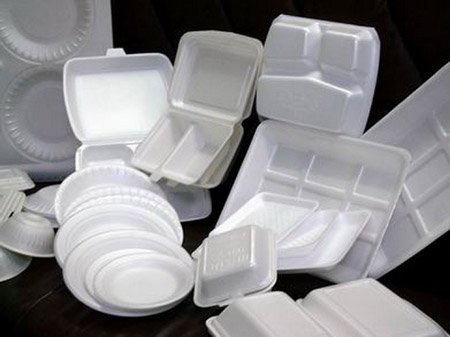
polystyrene containers


New York City bans polystyrene food containers


As estimated by the city’s Department of Sanitation, 28,500 tons of expanded polystyrene was discarded in 2014 and  approximately 90% of this amount consisted of single-use cups, trays, and containers.

The difficulty  to recycle economically due to heavy wax or plastic coatings, polystyrene food and beverage containers triggered their recent banning in New York City. A number of other cities, including Seattle, Portland, and San Francisco, as well as Washington, D.C. have already banned polystyrene food containers before.  Food establishments, stores, and manufacturers in New York City may not possess, sell, or offer to customers plastic foam containers and thus will be seeking alternative materials. In addition, the city will also prohibit the sale of loose-fill polystyrene—commonly called packing peanuts.

Polystyrene, is manufactured using benzene, from coal; styrene, from petroleum; and ethylene, a "blowing agent" used in the process since the crackdown on CFCs. Extracting these raw materials generates air and water pollution, and the process of whipping them together can lead to lung cancer and neurological problems in factory workers. Polystyrene is non-biodegradable and after entering the environment, it will around even after a century.
Human population using polystyrene food containers can ingest a bit of styrene with the drink and food. Researches have demonstrated that styrene has been present in our fatty tissue and breast milk for the past 30 years. 
After the banning, alternative containers will replace the foam containers.   For example, those made of recycled papers. Such alternatives may get degraded more easily than the polystyrene, however, they still cause environmental footprint. For example, from chemicals used during the manufacture stage. 
More information: 
http://www.earthresource.org/campaigns/capp/capp-styrofoam.html
http://cen.acs.org/articles/93/i3/Big-Apple-Bans-Foam-Containers.html
http://isites.harvard.edu/fs/docs/icb.topic967858.files/PolystyreneFactSheets.pdf


Thursday, January 22, 2015

Flame retardant-polybrominated diphenyl ethers

Polybrominated diphenyl ethers or PBDEs, are used as flame retardant in a wide array of products, including building materials, electronics, furnishings, motor vehicles, airplanes, plastics, polyurethane foams, and textiles. They are structurally akin to the PCBs and other polyhalogenated compounds, consisting of two halogenated aromatic rings.


PBDEs bioaccumulate in blood, breast milk, and fat tissues. Bioaccumulation is of particular concern in such instances, especially for personnel in recycling and repair plants of PBDE-containing products.
photo source: http://www.greenpeace.org/international/en/campaigns/detox/electronics/


People are also exposed to these chemicals in their domestic environment because of their prevalence in common household items.  PBDEs have been found in common foods such as salmon, ground beef, butter, and cheese and also in indoor dust, sewage sludge, and effluents from wastewater treatment plants.

There is also growing concern that PBDEs share the environmental long life and bioaccumulation properties of polychlorinated dibenzodioxins. With levels found in households, PBDEs could reduce fertility in humans. Because of their toxicity and persistence, the industrial production of some PBDEs is restricted under the Stockholm Convention, a treaty to control and phase out major persistent organic pollutants (POPs).

Despite of the regulations,  there is still huge amount of PBDEs in products in use.
A recent study has estimated 60% of the stock of PBDEs (most Deca-Mixture) in 2014 will remain in the use phase in 2020. Such estimation considers only the first use (no reuse and/or storage) of PBDE-containing products. Additional PBDEs will be in the use phase in the future via reuse of PBDE containing material.

For more information in PBDE stock and emissions, read this article recently published in Environmental Science & Technology